 Mood Note
1. Choose paper or an app
Both work. The best diary is the one you'll actually open.
- Paper is great if you like handwriting and a screen-free moment.
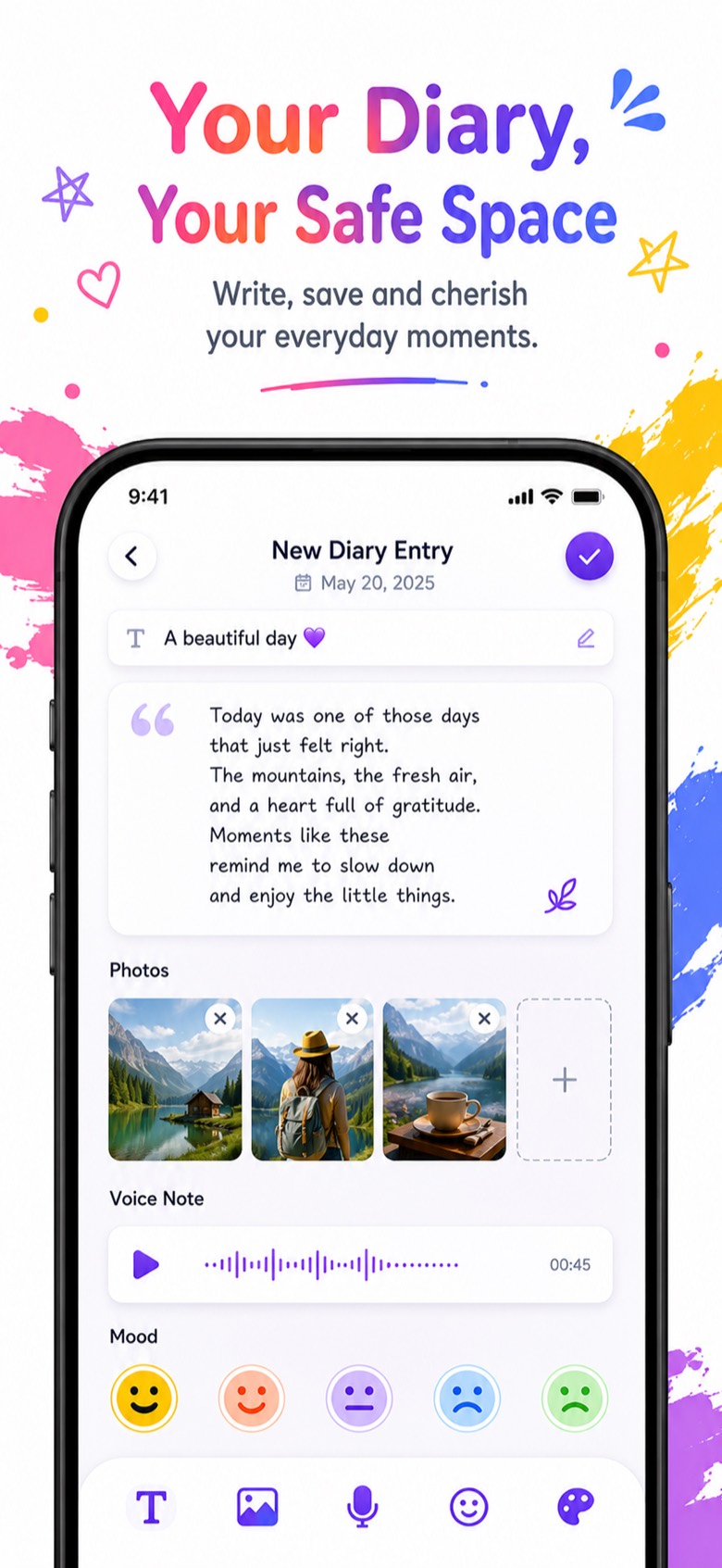
- An app is always in your pocket, can hold photos and voice notes, can be locked, and is backed up if you lose it.
If you pick an app, choose one with a proper lock. You'll write more honestly when you know nobody else can read it. (Here's what to look for in a private diary app.)
2. Pick a time, not a goal
"Write every day" is a goal. "Write in bed before I put my phone down" is a plan. Tie your diary to something you already do every day, like morning coffee, the commute home or right before sleep.
3. Start with three sentences
Your first entries should be tiny. Try this simple format:
- What happened today?
- How did it make me feel?
- What do I want to remember?
Three sentences take two minutes. On good days you'll write more without trying.
4. Keep a list of prompts
A blank page is the biggest reason people skip a day. Keep a few prompts ready:
- What made me smile today?
- What's on my mind that I haven't said out loud?
- What did I learn about myself this week?
- Who am I grateful for right now, and why?
- What would make tomorrow a good day?
5. Add a photo
A single photo can bring back a whole day. Adding pictures also makes your diary more fun to scroll back through, which keeps you coming back.
6. Write for yourself, not an audience
Don't polish. Spelling, grammar and "does this sound silly?" don't matter. If you catch yourself editing for an imaginary reader, it's a sign your diary needs more privacy, so lock it.
7. Talk when you can't write
On busy or tired days, speak your entry instead. A two-minute voice journal still counts, and it keeps the habit alive.
8. Track your mood
Tagging each entry with a mood takes one tap. After a few weeks you'll start to notice patterns, like which days are hard or what lifts you up, that you'd never see day to day.
9. Forgive the missed days
You will skip days. Everyone does. Don't try to catch up on everything you missed; just write about today. A diary with gaps is still a diary, and a guilty conscience is the fastest way to quit.
Want some structure? Mood Note includes short 3-day challenges with daily check-ins and streaks. They're a gentle way to build the habit without pressure.
Start today
Open a notebook or an app and write three sentences about today. That's it. Tomorrow, do it again. For trips, try a travel diary with photos and memory cards.
Frequently asked questions
How do I start writing a diary?
Pick a regular time, start with just three sentences (what happened, how you felt, what to remember), and keep a few prompts ready for days when you don't know what to write.
How long should a diary entry be?
As short as you like. Three sentences is enough. Consistency matters much more than length.
Is it better to keep a diary on paper or in an app?
Both work. Paper is screen-free; an app is always with you, can hold photos and voice notes, can be locked with Face ID, and is backed up.
What should I write in my diary?
Write what happened, how you felt about it, and anything you want to remember. Prompts like 'What made me smile today?' help on blank days.